














- Home
- Office Equipment
- Photocopy Accessories
- NPG-51 Primary Charging Roller (PCR)
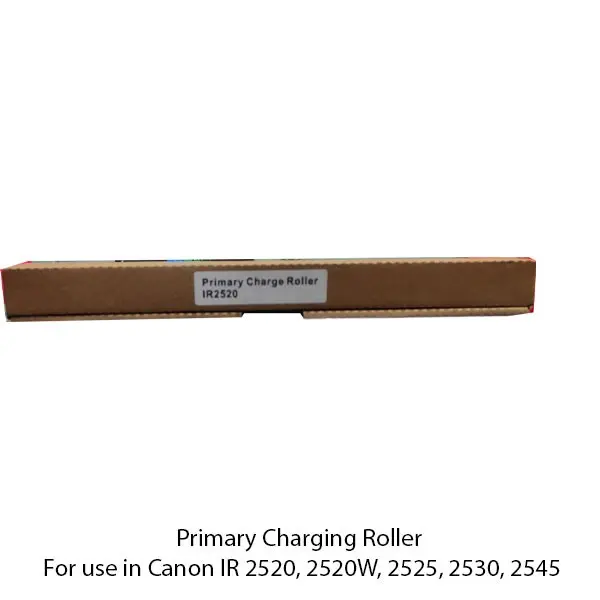
NPG-51 Primary Charging Roller (PCR)
Quick Details
- Item Category - Copier Toner
- Printing Color - Black
- Printing Technology - Laser
- Duty Cycle up to (Yield) - 14600 Pages
2,000৳
0.0৳
| Brand | Not Original Brad |
| Drum Cleaning Blade Model | NPG-51 Primary Charging Roller |
| Printing Color | Black |
| Printing Technology | Laser Technology |
| Drum Copy Life | Approx. Black 50,000 Pages |
| Supported Printer | IR 2520, IR 2520W, IR 2525, IR 2530, IR 2535, 2545 |
| Made by | China |
| Warranty | NPG-51 PCR Series Drum Cleaning Blade has a warranty. (T&C) |
Description
The NPG-51 Primary Charging Roller (PCR) is a high-precision electrical and mechanical component positioned inside the main drum unit of select Canon imageRUNNER photocopiers. Operating as a critical foundational stage in the electrophotographic (laser imaging) process, the PCR’s primary function is to condition the drum before the laser writes an image. It places a highly uniform, flat negative electrostatic charge across the entire rotating surface of the OPC (Organic Photoconductor) drum. Historically, older copiers used a high-voltage corona wire system to charge the drum, which split oxygen molecules apart and generated significant amounts of hazardous ozone gas. The PCR modernizes this workflow by pressing directly against the OPC drum surface. Composed of a rigid stainless-steel conductive shaft wrapped in a specialized, semi-conductive synthetic rubber or polyurethane elastomer layer, the PCR transfers an electrical charge directly via contact electrical discharge. This eliminates the need for open high-voltage arcs, drastically lowering workplace ozone emissions while maintaining an exceptionally stable electrical field. Beyond applying the primary uniform initial charge, the PCR performs a secondary, equally vital role: clearing residual memory fields. As the OPC drum completes a revolution, the PCR’s alternating current (AC) voltage component actively neutralizes any leftover ghost electrical charges remaining from the previously printed page. This prepares the drum surface for a completely blank, pristine electrical state for the next print pass. Because the PCR lives in direct, pressurized contact with the OPC drum, it is highly sensitive to the internal environment of the copy machine. Over millions of tracking rotations, it continuously sweeps up microscopic paper dust particles, stray chemical toner resins, and ozone deposits, forming a thin, glazed insulating film over its rubber surface. Physical wear from rough paper stocks or coarse cleaning blades can also pit, scratch, or nick the roller's exterior. When a primary charging roller begins to degrade or becomes contaminated, the electrical charge applied to the drum becomes uneven or drops entirely. Because toner powder naturally jumps toward uncharged or poorly charged areas on the drum, a failing PCR creates immediate, severe print anomalies. The most common diagnostic signs include dark, repeating horizontal lines spaced perfectly according to the roller's circumference, vertical gray background shading covering the entire page, blurry or double-imaged "ghosting" text from previous jobs, and light spots where dust blocks the charge. Replacing a contaminated or worn PCR is a highly cost-effective maintenance procedure that cleanly restores deep text contrast and eliminates background shading defects without replacing the entire expensive drum frame.
Video
Question and Answer
Have any Question?
Customer Reviews
Related Products