















- Home
- PC Component
- Processor
- Intel
- Intel Core i3 4th Genaration Processor
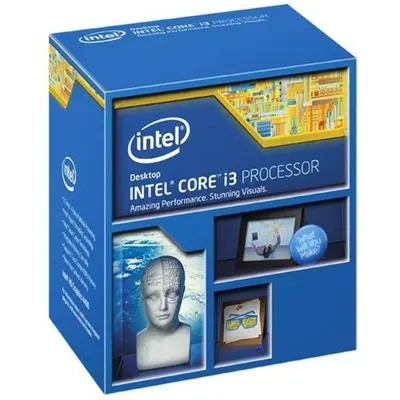
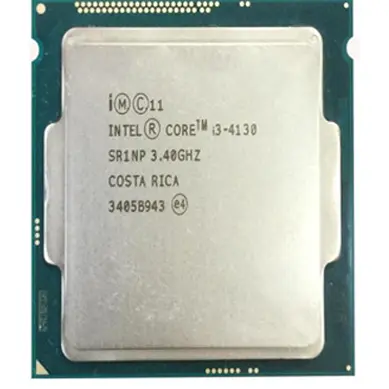
Intel Core i3 4th Genaration Processor
Quick Details
- Model: Core I3-4130
- Number Of Cores 2
- Number Of Threads 4
- Max Memory Size 32 GB
1,800৳
0.0৳
| Category | Details |
|---|---|
| Model | Intel Core i3‑4130 |
| Architecture / Generation | 4th Generation (Haswell) |
| Socket | LGA 1150 |
| Cores / Threads | 2 cores / 4 threads |
| Base Clock Frequency | 3.4 GHz |
| Turbo Boost | Not supported |
| Cache (L3) | 3 MB |
| TDP (Thermal Design Power) | 54 W |
| Memory Support | DDR3 1333 / 1600 MHz, dual-channel |
| Max Memory Size | Up to 32 GB (depends on motherboard support) |
| Integrated Graphics | Intel HD Graphics 4400 |
| Process Technology | 22 nm |
| PCI Express Version | PCIe 3.0 |
Description
The Intel Core i3 4th Generation processor, operating under the architecture code-named Haswell, debuted in 2013 as a pivotal release in Intel’s mainstream lineup. Engineered on a refined 22-nanometer tri-gate transistor manufacturing process, this generation brought significant advancements in energy efficiency and integrated graphics performance over its predecessors. Standard desktop variants (like the popular i3-4130 or i3-4330) utilize a 2-core, 4-thread configuration enabled by Intel’s Hyper-Threading technology, allowing the processor to efficiently handle parallel everyday tasks without choking. These processors generally feature 3MB or 4MB of Intel Smart Cache, support up to 32GB of DDR3 or DDR3L RAM, and use the LGA 1150 motherboard socket. Because this family lacks Turbo Boost, the chips rely entirely on their stable, high base clock speeds—frequently ranging between 3.4 GHz and 3.7 GHz—to deliver punchy, responsive performance for daily applications.
A hallmark feature of the 4th Generation i3 is the leap in its graphical capabilities. Packed with integrated Intel HD Graphics 4400 or 4600, it drastically reduced the typical user's reliance on discrete, low-end graphics cards. The integrated GPU introduced native support for 4K video playback, multiple displays, and modern API support for DirectX 11.1 and OpenGL 4.0. Beyond pure pixel pushing, Haswell focused heavily on platform power optimization. Desktop models typically pull around a modest 54W Thermal Design Power (TDP), while ultra-low voltage mobile variants designed for laptops often sip as little as 15W, providing vastly improved battery life for their era.
Video
Question and Answer
Have any Question?
Customer Reviews
Related Products