















- Home
- Accessories
- Headphone
- Fantech
- Fantech Chief II HG20 RGB USB Gaming Headphone
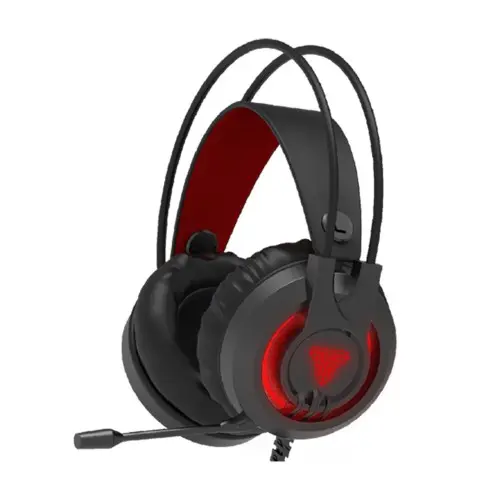
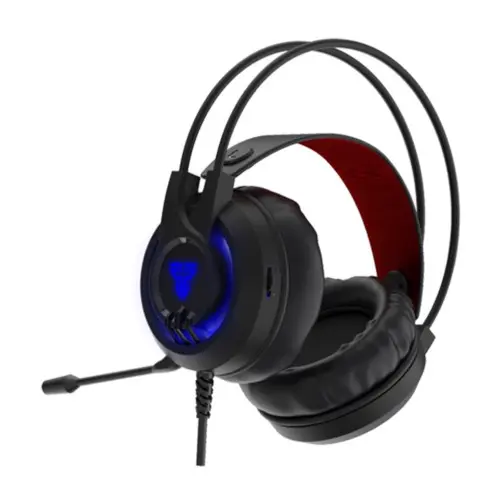
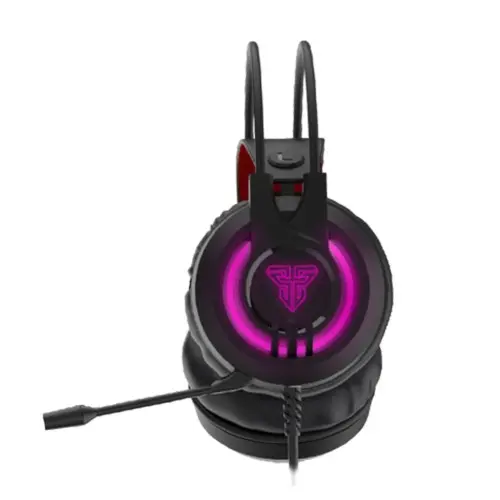
Fantech Chief II HG20 RGB USB Gaming Headphone
Quick Details
- Model: Fantech Chief II HG20
- Plug type: 3.5MM + Remote
- LED: RGB Colored lights
- Frequency range: 20-20KHz
- Cable length: 2m Plastic cable
1,700৳
0.0৳
| Technical Specification | |
| Frequency Range | Speaker Sensitivity : 121+/-3dB Microphone Sensitivity :-38+/-2dB |
| Impedance | 21+/-15% |
| Sensitivity | -38+/-2dB |
| Input Jack | 3.5MM Jack + Remote |
| Connectivity | Wired |
| Physical Specification | |
| Dimensions | 21 × 11 × 23 cm |
| Weight | 337g |
| Color | Black White |
| Cable Length | 2m Plastic cable |
| Microphone | |
| Sensitivity | -38+/-2dB |
| Warranty Information | |
| Manufacturing Warranty | 01 Year warranty |
Description
The Fantech Chief II HG20 RGB Gaming Headphone is an over-ear wired peripheral explicitly engineered to provide budget-conscious gamers with rich positional tracking, crystal-clear vocal communications, and a vibrant desktop look. Outfitted with an expansive hybrid interface, this headset utilizes a standard 3.5mm analog jack to feed high-fidelity audio across multi-platform environments—including PC rigs, laptops, and home gaming gamepads—while an attached USB plug powers its internal lighting system. This simple plug-and-play architecture completely bypasses the need for complicated software drivers, making it easy to drop directly into any battle station setup.
At its technical core, the Chief II HG20 features oversized 50mm custom-tuned neodymium magnet speaker units. Moving significantly more air than standard 40mm alternatives, this massive hardware configuration pushes a wide sound field capable of delivering deep, rumbling low-end bass extensions alongside clear midranges and sharp high frequencies. With an impressive speaker sensitivity rating of 121dB and an efficient 21-Ohm resistance profile, the headset translates spatial positioning flawlessly. This means you can pinpoint critical in-game directional cues—like distant gunfire, ambient atmospheric changes, or enemy footsteps creeping up behind you—long before they appear on your screen.
Video
Question and Answer
Have any Question?
Customer Reviews
Related Products